Monday, August 8, 2022

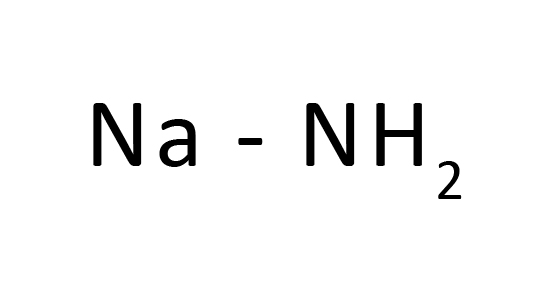
Reagent Friday: Sodium Amide (NaNH2)


NaNH2 (Sodium amide) 

 What it’s used for: NaNH2 is a strong base. In the rare cases when its strong basicity doesn’t cause side reactions, it can be an excellent nucleophile  It’s used for deprotonation of weak acids and also for elimination reactions.

The NH2- anion is the conjugate base of ammonia (NH3). If you’ll recall, the weaker the acid, the stronger the conjugate base – and since NH3 has a pKa of 38, NH2 is a strong base indeed. (Note that although I’m talking about NaNH2 here, the bases LiNH2 and KNH2 essentially behave the same way.)

As a strong base, NaNH2 will deprotonate alkynes, alcohols, and a host of other functional groups with acidic protons such as esters and ketones.

As a base, it’s often used in situations where a strong, small base is required. Like a piranha, NaNH2 is small, fast, has razor-sharp teeth, and can find its way into tight, enclosed spaces.

Mechanism Of NaNH2: Double Elimination To Give Alkynes

How it works.

Deprotonation of functional groups such as OH and even alkyne C-H should hopefully be straightforward, but the use of bases to make alkenes may require some explanation. This is what is known as an elimination reaction, in that the elements H and Br (in this example) are removed in order to form the alkene. Specifically, this is an example of an E2 reaction. 

Since the alkene still has a halide attached, this too can be removed to generate a second double bond (π bond). This is another example of the E2 in that the hydrogen has to be anti to the bromine that is eliminated, but is unusual in that it is sp2 hydrogen that is affected here:

A note of caution on the use of NaNH2 as a nucleophile. My trusty copy of March has the following to say:

“The conjugate base of ammonia  is sometimes used as a nucleophile, but in most cases offers no advantage over ammonia, since the latter is basic enough.”

Furthermore, since NaNH2 is a strong base, it has the significant disadvantage of promoting side reactions from elimination (this can occur when attempting an SN2 with NaNH2 as the nucleophile, for example). Therefore, it is generally wise to avoid using NaNH2 as a nucleophile in organic synthesis. Sodium azide (followed by reduction) is the usual substitute.

I suppose one could use NaNH2 as a nucleophile in a case like this one (below) but again it offers no significant advantage over NH3:

Friday, August 5, 2022

Complications from Dual Roles of Sodium Hydride as a Base and as a Reducing Agent

 Sodium hydride is a not unusualplace reagent for substrate activation in nucleophilic substitution reactions. Sodium hydride can behave each as a base and as a supply of hydride. This twin capacity withinside the presence of an electrophile which includes benzyl bromide affects withinside the formation of byproducts while dimethylformamide or acetonitrile are used as solvents for those reactions. The structural nature of those byproducts is found in this record.

Sodium hydride is a generally used base for deprotonation of alcohols, phenols, amides, ketones, esters, and different useful corporations for advertising in their nucleophilic substitution.1 Typically, sodium hydride and the reagents are jumbled in polar aprotic solvents which include DMSO, DMF, or acetonitrile for those SN2-kind reactions. Whereas the literature is replete with examples of using those solvents in such reactions, our hazard discovery of reactivity of sodium hydride with those generally used solvents, DMF and acetonitrile, suggests that sure undesired aspect reactions concerning those solvents are probably not unusualplace, however unrecognized. As is disclosed on this record, the foundation reason for those complicating aspect-reactions is the twin position that sodium hydride is famous as a base and as a supply of hydride.

The form of byproducts on the way to be disclosed on this record are usually hard to stumble on with not unusualplace visualization techniques and are smooth to overlook. Using benzyl bromide because the electrophile helped us to isolate the byproducts through UV detection and the systems had been at the end assigned through X-ray evaluation of unmarried crystals.

During benzylation of compound 1 withinside the presence of NaH and benzyl bromide in DMF, we diagnosed an uncommon stable byproduct. The 1H NMR spectrum of this byproduct becomes simple and becomes without resonances originating from the glucal substrate. Assignment of shape becomes achieved through X-ray evaluation. This compound crystallized withinside the monoclinic area institution P21/c. Once in hand, the X-ray shape amazed us, because it confirmed that the stable, compound 3, become a by-product of dimethylamine. At the beginning of the dimethylamine, moiety becomes absolutely DMF, which is served because of the solvent for the response. We are aware that DMF becomes freshly distilled earlier to apply withinside the response and that there has been no hint of dimethylamine in DMF as discerned through a poor ninhydrin assay.

Wednesday, August 3, 2022

Sodium Ethoxide Preparation and Formula

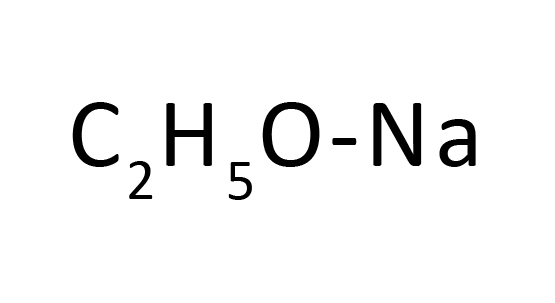
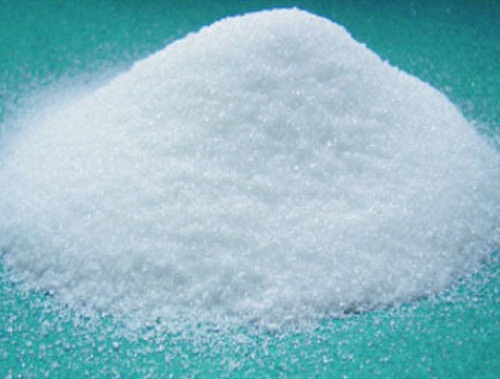
 Sodium ethoxide, additionally called sodium to ethylate, is the natural compound with the formulation C2H5ONa, or NaOEt. It is a white strong, even though impure samples seem yellow or brown. It dissolves in polar solvents including ethanol. It is typically used as a robust base


Chemical Formula

The chemical formulation for Sodium ethoxide is C2H5ONA.

Here is a study of the distribution of ions in Sodium Ethoxide. The left picture is the ball and stick version of the ethoxide anion whilst the only the proper is that of sodium cation.

Sodium ethoxide Preparation

Synthesis of Sodium ethoxide may be accomplished with the aid of using chemically reacting sodium hydroxide or sodium steel with ethyl alcohol. This allows for the creation of Sodium ethoxide in a liquid shape.


2 C2H5OH + 2 Na → 2 C2H5ONa + H2

A response among sodium hydroxide and anhydrous ethanol offers us Sodium ethoxide mixed with water. We can then take away the water with the aid of using the use of a drying agent and it's going to go away with Sodium ethoxide having extra purity.

C2H5OH + NaOH ⇌ C2H5ONa + H2O

The strong or powdered shape of Sodium ethoxide is yellow in color.


Sodium ethoxide in Ethanol

When sodium is introduced to ethanol, the chemical response produces hydrogen GAS which paperwork bubbles and leaves a sodium ethoxide answer. Sodium ethoxide is a shape of an alkoxide. The answer of sodium ethoxide in ethanol is colorless. Sodium ethoxide while introduced to water reacts to shape ethyl alcohol or ethanol.

Sodium ethoxide Boiling Point

The boiling factor of Sodium ethoxide is ninety-one ranges Celsius.

Sodium ethoxide MSDS

Sodium ethoxide is unsafe for human fitness if it comes in touch with the pores and skin and eyes. Exposure of the pores and skin to this chemical can deliver an upward push to blisters and inflammations. The chemical, in touch with the eyes, might also result in blindness. Inhaling or eating this chemical compound would possibly bring about critical fitness troubles like


Damage to the mucous membranes

  • Irritation of breathing and gastrointestinal tracts
  • Choking
  • Unconsciousness
  • Lung damage
  • In intense cases, it is able to additionally result in death.

In case there may be a touch of this chemical with the bodily body, ok care has to be taken to keep away from any critical fitness troubles. If the eyes are available touch with sodium ethoxide, the eyes have to be washed fastidiously with smooth water for numerous mins and a physician is to be consulted simply to be on the secure side.


The equal holds real for any pores and skin touch. Skin ointments have to be used to assuage the pores and skin from chemical burns and inflammations.


Inhaling those chemical fumes would possibly reason critical respiration troubles. The patient, in this case, has to be straight away taken to a sector of sparkling air, and tight garments if any have to be loosened. Artificial respiratory and oxygen is probably vital for buying lower back to everyday respiration.


Sodium ethoxide is a strong chemical compound. However, it's far especially volatile and could react violently if it comes in touch with acids, water or moisture, chlorinated solvents, air, dirt, and light. Sodium ethoxide is especially flammable. It is a hygroscopic chemical compound, which means that it's far touchy to air, moisture, or light. It is consequently really useful to preserve Sodium ethoxide far from open flames or something that would reason sparks and reasons the chemical to trap hearthplace. In case there may be a hearth place, dry chemical powders can be used to extinguish small fires and a sprig for a big hearth place.

Sodium ethoxide would possibly trap hearthplace if it comes in touch with air. So it has to be saved in a dry, tight, airless box and saved in a fab place.

Special sodium ethoxide protection measures are had to comply with whilst handling this chemical. While coping with this chemical, unique safety equipment like splash goggles, vapor/dirt respirator, gloves, suit, etc. have to be used with the purpose to make a certain absence of direct exposure.


Sodium ethoxide is classed as Hazard Class 4.2.

While disposing of wastes of sodium ethoxide, has to be accomplished in methods that might be according to state, federal, and neighborhood environmental rules to keep away from ability unsafe conditions.

Monday, August 1, 2022

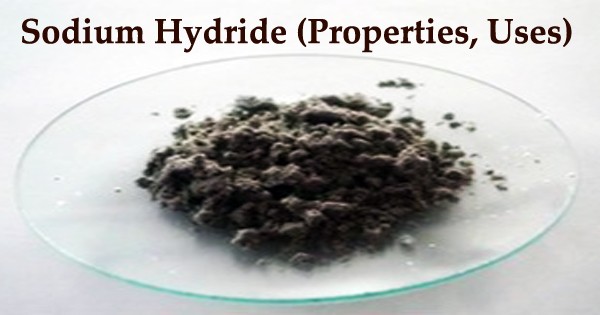
Sodium Hydride (Properties, Uses)

 In oil, sodium hydride is a silvery to whitish powder or slurry. It is the chemical compound with the empirical formula NaH. This alkali metal hydride is largely utilized in organic synthesis as a powerful but flammable base. In contrast to molecular hydrides such as borane, methane, ammonia, and water, NaH is a saline (salt-like) hydride made up of Na+ and H− ions. Ionic crystals, salt compositions in which the hydrogen is negative monovalent ions, include sodium hydride.


When heated, NaH decomposes without melting, and sodium hydride is hydrolyzed with water to produce sodium hydroxide and hydrogen. It’s an ionic substance that’s insoluble in organic solvents (yet soluble in molten Na), indicating that there are no H- ions in the solution. Because of NaH’s insolubility, all reactions involving it takes place at the solid’s surface. Pure sodium hydride is silver needle-like crystals, but commercially available sodium hydride commerce is usually a mild gray crystalline powder with a 25 percent to 50 percent sodium hydride concentration dispersed in oil. The relative density is 0.92.


The direct interaction of hydrogen and liquid sodium Hyderide produces NaH. Although pure NaH is colorless, samples usually seem grey. NaH (0.968 g/cm3) is about 40% denser than Na. Sodium hydride has a crystalline rock salt structure (lattice constant a = 0.488nm), and hydrogen ion exists in anion form as lithium hydride in ionic crystalline. It decomposes explosively in water; reacts violently with lower alcohols; dissolves in molten sodium and molten sodium hydroxide; insoluble in liquid ammonia, benzene, carbon tetrachloride, and carbon disulfide; has a heat of production of 69.5kJ mol-1; and decomposes into metallic sodium and hydrogen at a high temperature of 800 °C.

Thursday, July 28, 2022

Sodium hydride Formula and Structure

 Sodium hydride is the chemical compound with the system NaH. It is in general used as a robust base in natural synthesis. NaH is a consultant of the saline hydrides, which means it's miles a salt-like hydride, composed of Na+ and H− ions, in evaluation to the greater molecular hydrides consisting of borane, methane, ammonia, and water. It is an ionic cloth this is insoluble in natural solvents (even though reputedly soluble in molten Na), constant with the reality that H− stays an unknown anion in solution. Because of the insolubility of NaH, all reactions regarding NaH arise on the floor of the strong.


Sodium hydride Formula

Sodium hydride is a pretty reactive inorganic hydride used as a robust base.

Formula and shape: The chemical system of sodium hydride is NaH, and its molar mass is 24. zero g/mol. NaH is an ionic compound as proven below, and is the product of sodium cations (Na+) and hydride anions (H-). It has the equal octahedral crystal shape as NaCl, with every sodium ion surrounded via way of means of six hydride ions. The loose hydride ions deliver this molecule its robust fundamental character.

Preparation: Sodium hydride is ready via way of means of the direct response among sodium metallic and hydrogen gas.

2 Na + H2 → 2 NaH

Physical properties: Pure NaH is drab or white strong with a density of 1. four g/mL, and a melting factor of 800 °C. However, because of its reactivity, its miles normally to be had as a gray strong dispersed in mineral oil (60% weight via way of means of weight) for secure handling.

Chemical properties: Pure NaH can easily ignite in air. When it comes into touch with water gift withinside the air, it releases pretty flammable hydrogen gas. When open to air and moisture, NaH is additionally received without difficulty and hydrolyzed into the robust corrosive base, sodium hydroxide (NaOH). Thus, to save you from fires and explosions, sodium hydride is offered as a dispersion in mineral oil, permitting it to be effectively dealt with in the air.

NaH + H2O → NaOH + H2

Sodium hydride is a robust base usually utilized in natural chemistry, in which its miles are stored in an inert atmosphere (with 'dry' gases consisting of argon, nitrogen, etc.). It is insoluble in natural solvents.

Uses: Despite its risky reactivity, NaH is extensively used as an effective deprotonating and decreasing agent for plenty of natural reactions. It also can be used as a desiccant or drying agent for laboratory chemicals. Due to its cap potential to launch hydrogen gas, its miles are being explored as a hydrogen garage agent in gas molecular vehicles.

Tuesday, July 26, 2022

Chemical Manufacturers and Suppliers-Alkali Metals

 Alkali Metals is one of the leading Chemical suppliers in India and the USA for industrial and specialty chemicals, raw materials, and minerals. Being one of the top chemical manufacturing companies, we manufacture and supply chemicals to industries in a multitude of verticals.


We are specialized Industrial Chemical Suppliers in providing our clients with fast and reliable chemical shipments to enable a seamless flow of raw materials. Along with our reliability, the quality of the products we deliver, easy ordering process, and competitive prices are what retain our clients and attract new ones for their chemical needs.


We have our own research and development department along with a research lab equipped with advanced technology and a smart team for synthesis. Our best services have led us to establish long-term in-depth cooperation with many customers all over the world and be among the leading players of Industrial Chemical Suppliers.

Overview  

Being the best Chemical suppliers in India and USA, We have profound experience in synthesizing chemicals economically and continuously. Thus, we are the comprehensive solution provider in identifying, synthesizing, and qualifying a wide range of chemicals. Being an R&D-oriented manufacturing organization and a Speciality Chemicals Industry, we have developed extensive processes to make our characteristic products available to our clients in the given time and at the best quality.

Our familiarity and years of experience with the market standards and requirements have led us to consult our clients with the right knowledge and be among the best Chemical Manufacturing Companies. We are also one among the top specialty chemicals industry with over five decades of manufacturing experience.

Our vision is to drive innovation and expand the global operational footprint. We ensure quality and guarantee that all our chemicals meet our customer’s requirements. We also provide Sodium metal along with other chemicals, APIs, and raw material additives for manufacturers in diverse industries. What makes Alkali Metals qualified to meet your client's chemical needs is our professional and hands-on experience. We are committed to building and maintaining lasting relationships with each of our clients and this is done with our personalized service.

Wednesday, July 20, 2022

An Overview of Sodium Hydride Preparation

 Sodium hydride is the chemical compound with the empirical component NaH. This alkali steel hydride is mostly used as a robust, but flammable base in natural synthesis. NaH is a base of extensive scope and application in natural chemistry. As a superbase, it's far able to deprotonate a variety of even susceptible Bronsted acids to present the corresponding sodium derivatives. Typical "easy" substrates include O-H, N-H, and S-H bonds, inclusive of alcohols, phenols, pyrazoles, and thiols.


About:

Sodium Hydride is essentially an alkali metal hydride with the empirical components of NaH. This chemical compound is considered a strong base and is widely used in organic chemistry. Sodium hydride is likewise taken into consideration as a saline hydride or salt-like hydride due to the fact it's far composed of Na+ and H- ions not like the opposite molecular hydrides such as methane, ammonia, etc. It is highly insoluble in natural solvents and as a result of these belongings, all reactions related to NaH occur on the surface of the solid.


Preparation of Sodium Hydride

The training of Sodium Hydride includes putting the wiped clean metal sodium in steel, a porcelain tray, or a hard-melted glass tube technically known as a reactor. Prior to the reaction-taking area, the air is removed from the reactor with the aid of using passing hydrogen. The steel tray with sodium is heated to 370o C at the same time as the hydrogen used is purified by drying over phosphorus pentoxide and passing it thru the melted sodium. The give-up made from the response that is the sodium hydride may be gathered because it condenses at the less warm components of the tube withinside the shape of a white plaque.

When Sodium hydride is ready with the aid of using such a technique it carries a small amount of metal sodium as an impurity. Another important truth approximately this chemical compound is that its natural crystalline white form of it ignites at 230o C in surroundings of oxygen.


Uses of Sodium Hydride

Owing to its strong base characteristics, it finds wide application in organic and inorganic high-quality chemical training.

It acts as an effective reducing and deprotonating agent for lots of natural reactions.

It finds an extensive application as a desiccant or drying agent for lots of natural reactions.

On account of its cap potential to launch hydrogen, its road as a hydrogen storage agent in gas cell vehicles is being explored.

Na+H-

The Sodium Hydride Overview

  Sodium hydride Sodium hydride can be utilized on the other hand as a metallising reagent. The response can be done in THF or benzene, yet ...